
Every order ships USPS Priority — $10.95 flat-rate USPS Priority shipping on all US orders, no minimum. Free shipping on domestic orders over $299.
Welcome to Stillpoint. Subscribe to our newsletter for sale details and new-product news · One discount code per order · Every order is hand-poured, packed with care in ceremony, and shipped as we receive it.

Black Pepper CO₂ Extract | Piper nigrum | Warming, Grounding

Piper nigrum

  • Black Pepper CO₂ Extract | Piper nigrum | Warming, Grounding

Average Rating: (see reviews)

$17.00 Ex Tax: $17.00

Essential Facts

  • Latin Name: Piper nigrum
  • Country of Origin: Costa Rica
  • Botanical Family: Piperaceae
  • Plant Parts: Dried fruit
  • Note Classification: Middle/Base
  • Cultivation Method: Wild Harvested
  • Method of Extraction: CO2 Select Extraction
  • Extraction Date: October 2025
  • Approx. Shelf Life: Long time
  • Chemical Family: Ketones
  • Aroma: Earthy, Green, Slightly sweet, Soft, Warm
  • Energetic Applications: 2nd Chakra - relationships, creation energy, 7th Chakra - higher information, Grounding, Protective
  • Therapeutic Properties: Analgesic, Anti-arthritic, Anti-asthmatic, Anti-inflammatory, Anti-rheumatic, Anti-spasmodic, Carminative, Stomachic, Warming
Notes & Use

Personal Use

(Piper nigrum, CO₂ select extract)

This is not the dusty shaker from the back of your spice rack. Stillpoint’s Black Pepper CO₂ extract smells like fire just before it catches—warm, dry, and deeply aromatic with a soft, spicy edge that curls into the body rather than burns. It’s bold without being sharp. Clean without being sterile. And it stirs something deep in the blood—an old memory of movement, will, and trust in your own momentum.

Our Black Pepper CO₂ extract is obtained from dried peppercorns of Piper nigrum through select supercritical carbon dioxide extraction. The result is a true-to-plant representation: rich in monoterpenes, sesquiterpenes, and oxygenated compounds like caryophyllene oxide, which make this extract a powerful ally for both the physical and emotional body.

Where steam-distilled Black Pepper can feel one-dimensional, this CO₂ holds warmth, softness, and a slow-building strength. It doesn’t just stimulate—it grounds and stabilizes as it moves heat through the system.

Therapeutic Applications
Muscle + Joint Support
Black Pepper CO₂ is known for its circulatory stimulation and warming analgesic action. It may help ease muscle stiffness, joint pain, and cold-related tension—especially when applied in warming massage blends. Useful in formulas for arthritis, overexertion, or sluggish movement.

Digestive Support
Traditionally used to stimulate digestion, this extract supports peristalsis and may help relieve bloating, constipation, and loss of appetite. Its warming nature enlivens a sluggish gut—particularly when stagnation is tied to cold constitutions or emotional holding.

Immune + Respiratory Strength
With its monoterpenes and sesquiterpenes, Black Pepper CO₂ offers mild antimicrobial, expectorant, and antispasmodic effects. It may assist in clearing congestion and supporting immunity, particularly when included in warming, circulatory blends.

Circulatory Activation
Excellent for poor circulation, cold extremities, and post-illness recovery. This oil stimulates blood flow, especially when used topically in salves or massage oils focused on limbs, abdomen, or lower back.

Addiction + Withdrawal Support
Black Pepper has been studied for its ability to reduce nicotine cravings and support withdrawal processes—both physically and emotionally. The CO₂ extract is ideal for inhalation-based formulas aimed at craving reduction, emotional steadiness, and habit interruption.

Traditional Use

Black Pepper has been used for over 4,000 years in both culinary and medicinal traditions, revered for its ability to ignite internal fire, stimulate digestion, and protect the body from illness and cold. It has held a place not just as a seasoning—but as a medicine of movement, metabolism, and circulation.

Digestive Stimulant
In Ayurvedic and Unani medicine, Piper nigrum was used to kindle agni—the digestive fire—and help relieve symptoms of bloating, gas, constipation, and poor nutrient absorption. Black Pepper was often combined with other herbs to enhance bioavailability (such as with turmeric), a practice still supported today by modern research on piperine.

Circulatory + Warming Tonic
Black Pepper was traditionally applied in liniments, poultices, or infused oils to relieve cold limbs, sluggish blood flow, and muscular tension. It was used to warm the body, stimulate movement, and counteract the damp, heavy qualities of cold-weather illnesses or sedentary living.

Support for Respiratory Congestion
In traditional folk medicine, it was added to steams, teas, and smoke blends to clear phlegm, support bronchial strength, and alleviate wet coughs. Its warming, drying nature was especially helpful in kapha-dominant respiratory conditions.

Immune + Antimicrobial Use
Historically considered a protective herb, Black Pepper was included in spice blends and herbal formulations for its antimicrobial, antiviral, and preservative qualities. It was thought to “cut through” stagnation and defend against seasonal threats and digestive infections.

Energetic + Addiction Support
Though less emphasized in traditional records, Black Pepper has more recently been incorporated into addiction support protocols, especially for tobacco withdrawal, where its warming, steadying presence is used to ease cravings and support mental-emotional grounding.

Botany

Piper nigrum is a perennial climbing vine in the Piperaceae family, native to the humid tropics of India and Sri Lanka. Today, it is cultivated in many tropical regions worldwide for its fruit—peppercorns—which are harvested at various stages of ripeness and processed into black, white, or green pepper depending on post-harvest treatment.

The black peppercorn is produced by harvesting the still-green, unripe fruit, then briefly boiling and drying it in the sun, which causes the outer skin to darken and wrinkle. These dried fruits are the raw material used in CO₂ extraction.

Botanical Name: Piper nigrum
Family: Piperaceae
Common Names: Black Pepper, Peppercorn Vine
Plant Type: Perennial tropical climbing vine
Part Used for Extraction: Dried unripe fruits (black peppercorns)
Growth Habit: Woody vine with aerial roots, often trained on trees or poles; grows up to 10–15 meters in height
Flowering Season: Varies by region; typically blooms and fruits multiple times annually in tropical climates
Harvest Time for CO₂ Extraction: When berries are still green and firm, just before full maturity

Physical Characteristics:
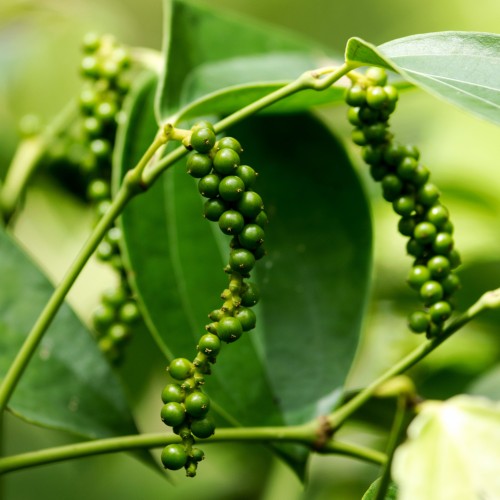
  • Leaves: Heart-shaped, dark green, glossy, with pronounced veins
  • Stems: Long, climbing, and woody with aerial roots for support
  • Flowers: Tiny, pale green-white, arranged in pendulous spikes
  • Fruits: Small spherical berries that ripen from green to red, wrinkling to black when dried

Native Habitat + Growth Conditions:
  • Native To: Western Ghats of India and Sri Lanka
  • Preferred Soil: Rich, moist, well-drained loam
  • Sunlight: Partial shade to full sun
  • Climate: Warm, humid tropics with high rainfall
  • Ecological Notes: Grows best in symbiosis with support trees; long-lived vine, often producing for 20+ years

Energetic Botanical Signature
Black Pepper doesn’t flower in showy ways—it hides its power in the seeds, in the internal fire that forms under heat and pressure. Its fruits are small, round, dark, and wrinkled—holding a depth of heat and potency disproportionate to their size.

As a climbing vine, Piper nigrum reaches upward, seeking support, yet its medicine is rooted in downward motion—pulling energy into the gut, into the blood, into the will. It teaches how to contain power, not explode with it. Its energy is concentrated, catalytic, and direct—a teacher of action without aggression.

It brings heat where there is cold. It brings motion where there is stuckness. It clears the clutter and reminds you: You are allowed to want, to move, and to act.
Energetics

Energetic Properties

Builds protection, strength, confidence and creation. It helps to invoke the influence of Venus to grant ones wishes. It is protective.  Black Pepper is distilled from the dried fruit and correlates to the second chakra for creation. The color black connects us to the night sky.

Black Pepper CO₂ is Fire in balance—not the flame that consumes, but the inner heat that transforms stagnation into action. It anchors energy that’s been scattered, unclaimed, or stuck in emotional debris. This oil doesn’t ask permission—it moves through resistance with steadiness, purpose, and a low, glowing spark that returns the will to the body.

Energetically, Black Pepper is an initiator. It activates the inner fire that fuels courage, digestion, discipline, and direction—especially when fear, grief, addiction, or avoidance have taken root. It is particularly resonant for those who have lost contact with their own desire, or whose inner spark has dulled under pressure or depletion.

Spiritually, this extract clarifies the astral body, cleansing out the energetic "static" that accumulates when you’re overly entangled in other people’s projections, drama, or needs. It’s ideal for empaths or those doing deep clearing work—especially when the emotional body is congested with repressed anger, shame, or emotional toxicity held in the belly, chest, or solar plexus.

Black Pepper also connects to the Stomach and Small Intestine meridians in Chinese medicine, governing discernment, digestion, clarity, and boundaries—both physically and emotionally. It says: Take in what serves. Let the rest go.

Energetic Themes
  • Igniting inner fire after periods of emotional dullness, grief, or dissociation
  • Reclaiming direction, desire, and personal agency
  • Supporting the will to transform—especially during healing, addiction recovery, or grief
  • Clearing the astral body of energetic debris, projections, and unhealthy entanglements
  • Releasing “emotional toxicity” from the gut (shame, guilt, anger, resentment)
  • Strengthening boundaries and energetic digestion

Chakra Resonance
  • Solar Plexus (Manipura): Clears emotional congestion, reignites inner power
  • Sacral (Svadhisthana): Moves creative blocks and awakens embodied desire
  • Root (Muladhara): Grounds will into action; anchors presence in the body
  • Heart (Anahata): Gently softens defensive walls formed from old resentment
  • Third Eye (Ajna): Clears distortion when the mind is fogged by emotional overload

Traditional & Folklore

Black Pepper has been called the “King of Spices” for millennia, not just for its flavor, but for its vital, activating power. In ancient India, it was treasured as both food and medicine—used in Ayurveda to kindle agni (digestive fire), treat respiratory illness, and prevent the accumulation of ama (toxic residue).

In Siddha and Unani medicine, Black Pepper was often combined with other herbs to direct their action, enhance absorption, and protect the gut. This ancient use laid the foundation for today’s understanding of piperine’s ability to increase bioavailability—especially when used alongside turmeric.

In Traditional Chinese Medicine, Black Pepper was associated with the Kidney, Stomach, and Spleen meridians, used to dispel cold, move stagnant Qi, and warm the yang when vitality waned. It was especially favored in the winter months to protect the body from chill and dampness.

In European folk traditions, peppercorns were believed to protect against evil, stimulate desire, and “burn away” spiritual heaviness. It was sometimes added to protective sachets, scattered across thresholds, or placed near food stores to deter spoilage and negativity alike.

Black Pepper’s value was once so great that it was traded ounce for ounce with gold. In this context, its heat was more than culinary—it was currency, power, and presence. A symbol of the fire needed to move, transform, and protect what matters.
Chemistry

Chemical Components

Black Pepper CO₂ extract is rich in monoterpenes and sesquiterpenes, with a warming, grounding chemistry that makes it deeply supportive for muscular, digestive, circulatory, and emotional work. The select extraction captures more of the whole-spice profile than steam distillation—preserving heavier, non-volatile compounds that offer greater depth and staying power.

Key Chemical Families + Compounds
  • Monoterpenes
    • α-Pinene, β-Pinene, Limonene, Sabinene
    • Properties: Stimulant, bronchodilator, mild antimicrobial, enhances mental clarity
  • Sesquiterpenes
    • β-Caryophyllene
    • Properties: Anti-inflammatory, analgesic, grounding to the nervous system
  • Oxides + Ketones (trace)
    • Caryophyllene oxide
    • Properties: Antifungal, supports skin and wound healing, contributes to depth of scent
  • Alkaloid + Resinous Compounds (CO₂ only)
    • Piperine (trace), resinous fractions
    • Properties: Enhance circulation, stimulate digestion, increase bioavailability of herbs

Therapeutic Implications of the Chemistry
  • Muscle + Joint Relief: Warming and analgesic compounds help reduce muscular stiffness and promote circulation.
  • Digestive Enhancement: Stimulates appetite, supports bile flow, and can ease sluggish digestion.
  • Respiratory Stimulation: Monoterpenes help open airways and clear congestion without excessive intensity.
  • Craving + Withdrawal Support: β-Caryophyllene and trace piperine offer neurological grounding and help soothe the nervous system during addictive pattern interruption.
  • Immune Activation: Antimicrobial action supports immune response during seasonal vulnerability or when working with chronic stagnation.


Recipes & Blends

Recipes & Blends

Warming Circulation Oil (for Cold Extremities or Sluggish Flow)
  • 10 mL carrier oil (Sesame or Arnica-infused Jojoba)
  • 2 drops Black Pepper CO₂ (Piper nigrum)
  • 2 drops Rosemary ct. camphor (Salvia rosmarinus)
  • 1 drop Ginger CO₂ (Zingiber officinale)
Use: Massage into cold hands, feet, or lower back to activate circulation. Ideal for winter months or post-illness recovery.

Digestive Fire Belly Balm
  • 15 mL carrier oil (Calendula macerate or Fractionated Coconut)
  • 2 drops Black Pepper CO₂
  • 2 drops Sweet Fennel (Foeniculum vulgare)
  • 1 drop Sweet Orange (Citrus sinensis)
Use: Apply to abdomen and massage clockwise to support sluggish digestion, bloating, or emotional tension held in the gut.

Energetic Recipes
Unblocking the Will Anointing Blend
  • 5 mL carrier oil (Pomegranate or Camellia)
  • 2 drops Black Pepper CO₂
  • 1 drop Palo Santo (Bursera graveolens)
  • 1 drop Laurel Leaf (Laurus nobilis)
Use: Apply to the solar plexus, sternum, and/or wrists before rituals, decision-making, or healing sessions when direction feels clouded or energy is frozen.

Astral Debris Clearing Inhaler
  • 5 drops Black Pepper CO₂
  • 4 drops Frankincense CO₂ (Boswellia carterii)
  • 3 drops Lemon Myrtle (Backhousia citriodora)
Use: Add to a blank inhaler. Use after energy work, travel, emotionally intense interactions, or when you feel weighed down by “off” energy.


Safety Etc.

Safety Information

Black Pepper CO₂ is generally considered a safe and well-tolerated extract when used appropriately. It is potent, warming, and best applied with care in sensitive blends.
  • Dilution: Use at 1–2% for most topical applications. While well-tolerated by most, it can cause a warming or sensitizing effect on sensitive skin or mucous membranes—especially when used in larger quantities or with other stimulants.
  • Avoid near eyes, broken skin, or mucous membranes.
  • Children: Use cautiously with children under 5 years of age, and in very low concentrations.
  • Pregnancy/Breastfeeding: Considered safe in low dilution and under professional guidance.
  • Internal use is not recommended unless working with a clinically trained aromatherapist experienced in CO₂ extracts.
This extract is non-phototoxic and not known to be irritating when used with proper dilution. As a CO₂ extract, it offers deeper aromatic and therapeutic components than steam-distilled Black Pepper and should be dosed with respect for that strength.

References

Berkowsky, Bruce. Spiritual PhytoEssencing Materia Medica. Joseph Ben Hil-Meyer Research, Inc. 2005. Sections on Piper nigrum (Black Pepper) including Tubercular miasm, Kidney energetic function, Sefirot correspondences, and constitutional resonance.

Reviews (0)

Write a review

Note: HTML is not translated!
    Bad           Good
Powered By OpenCart
Stillpoint Aromatics © 2026