Personal Use
The chemical components vary dramatically depending on the chemotype. Be certain about the chemical profile and chemotype of the oil you’re using. If the oil contains significant amounts of eugenol, it may cause skin irritation for people with sensitive skin. The oil we’re studying is the linalol chemotype.
Known Basil chemotypes: linalol, estragole (methyl chavicol), eugenol, methyl eugenol, methyl cinnamate.
Known Basil chemotypes: linalol, estragole (methyl chavicol), eugenol, methyl eugenol, methyl cinnamate.
Traditional Use
Basil is excellent for soothing a chest cold with a spasmodic cough. It is a very effective antispasmodic, and can stop coughing for several hours after each application to the chest.
I also like to rub a cream with Sweet Basil on my neck to get rid of headaches. For this application, it can be used on its own or blended with Lavender. It seems to work best if the headache is stress or tension related.
It's also a good digestive aid and can be added to a blend for gas or cramping after eating. Basil is also used for muscle pains and cramping.
Botany
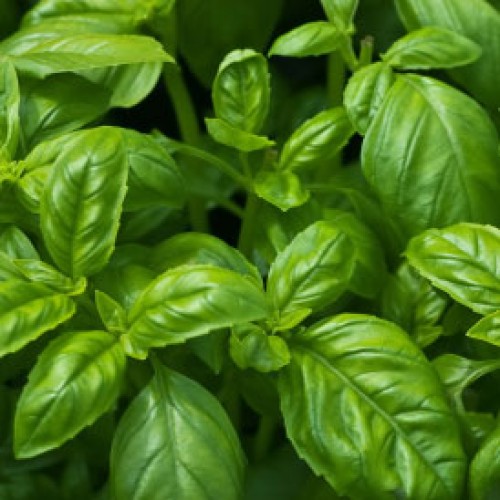
Basil is an annual, or sometimes perennial, herb used for its leaves. Depending on the variety, plants can reach heights of between 30 and 150 cm (1 and 5 ft). Its leaves are richly green and ovate, but otherwise come in a wide variety of sizes and shapes depending on cultivar. Leaf sizes range from 3 to 11 cm (1 to 4+1⁄2 in) long, and between 1 and 6 cm (1⁄2 and 2+1⁄2 in) wide. Basil grows a thick, central taproot. Its flowers are small and white (Wiki)