
Every order ships USPS Priority — $10.95 flat-rate USPS Priority shipping on all US orders, no minimum. Free shipping on domestic orders over $299.
Welcome to Stillpoint. Subscribe to our newsletter for sale details and new-product news · One discount code per order · Every order is hand-poured, packed with care in ceremony, and shipped as we receive it.

Lodgepole Pine Essential Oil | Resilience & Respiratory Support | Limited Reserve

Pinus contorta

  • Lodgepole Pine Essential Oil | Resilience & Respiratory Support | Limited Reserve

Average Rating: (see reviews)

$12.00 Ex Tax: $12.00

GC/MS Report

Gas Chromatography Analysis (%)

Monoterpenes

β-phellandrene 32.82
β-pinene 20.89
δ-3-carene 19.43
terpinolene 5.32
α-pinene 4.92
myrcene 1.71
d-limonene 1.44
α-phellandrene 0.80
γ-terpinene 0.65
sabinene 0.60
cis-β-ocimene 0.42
camphene 0.37
α-terpinene 0.30
α-thujene 0.29
para-cymene 0.22
trans-β-ocimene 0.09
para-cymenene 0.03
tricyclene 0.03

Monoterpenols

terpinen-4-ol 0.15
α-terpineol 0.12
linalol 0.10

Sesquiterpenols

a-cadinol 0.72
Germacrene D-4-ol 0.14
1-epi-cubenol 0.12
δ-cadinol 0.10
viridiflorol 0.06

Sesquiterpenes

δ-cadinene 4.83
γ-cadinene 2.40
6,9-guaiadiene 1.00
α-muurolene 0.66
trans-cadina-1(6),4-diene 0.46
α-selinene 0.40
germacrene D 0.28
α-cadinene 0.16
β-selinene 0.16
δ-elemene 0.14
α-cubebene 0.11
γ-muurolene 0.10
β-elemene 0.10
cis-muurola-4(14),5-diene 0.09
β-caryophyllene 0.07
γ-curcumene 0.04

Esters

bornyl acetate 0.43
geranyl acetate 0.43

Oxides

Ent-manoyl oxide 0.20
Manoyl oxide 0.11

Essential Facts

  • Latin Name: Pinus contorta
  • Country of Origin: Cameroon
  • Botanical Family: Pinaceae
  • Plant Parts: Cones, Needles
  • Note Classification: Top
  • Cultivation Method: Wild Harvested
  • Method of Extraction: Steam or Hydro Distillation
  • Extraction Date: January 2024
  • Approx. Shelf Life: 5 years
  • Chemical Family: Monoterpenes
  • Batch: lodgpine
  • Aroma: Balsamic, Cool, Fresh, Piney
  • Energetic Applications: 4th Chakra - unconditional love, 5th Chakra - speaking truth, 7th Chakra - higher information, Clarity, Energizing, Protective, Uplifting
  • Therapeutic Properties: Analgesic, Anti-depressant, Anti-inflammatory, Anti-microbial, Anti-oxidant, Anti-rheumatic, Anti-septic, Cephalic, Cooling, Deodorant, Energizing, Immune support
Notes & Use

Personal Use

Lodgepole Pine Essential Oil (Pinus contorta)
This oil smells like a forest exhale. Lodgepole Pine (Pinus contorta), distilled from wild-harvested needles and twigs in the remote Northeast, carries a scent that is resinous, fresh, slightly smoky, and deeply grounding—a pine with both strength and stillness.
Unlike sharper pines, this distillation opens with a woody green clarity and finishes with a soft, balsamic drydown. There’s a quiet depth in this oil—a medicine that grounds without hardening and awakens without overstimulating.

Stillpoint’s Lodgepole Pine essential oil is a limited batch distillation, gathered and steam distilled from freshly harvested material in pristine, high-altitude conditions. It's a rare offering that embodies the wild, wind-shaped resilience of the trees it comes from.

Therapeutic Applications
Respiratory + Lung Support
Lodgepole Pine’s high monoterpene content gives it powerful mucolytic, expectorant, and bronchodilating properties. It's especially effective for congested, heavy lungs—the kind that come with grief, infection, or chronic stagnation. It opens the breath without the bite of more aggressive pines.

Muscle + Joint Relief
Warming, anti-inflammatory, and gently analgesic, this oil may help ease chronic pain, arthritis, and muscular tension. It pairs beautifully in salves or massage blends for those who are achy, cold, or energetically weighed down.

Fatigue + Low Vitality
Energetically and physically, this pine acts as a nervous system stimulant and tonic—without being jarring. It may help increase stamina, especially in cases of emotional exhaustion, burnout, or adrenal depletion.

Immune System Support
Traditionally used to help ward off seasonal colds and flu, Lodgepole Pine can be diffused or applied in dilution to support the body's resilience and immunity, especially during colder months.

Skin + Circulation
With mild rubefacient and antimicrobial effects, this oil may assist with circulatory sluggishness, minor skin infections, and as a warming addition to chest rubs or immune blends.

Traditional Use

Lodgepole Pine has a long-standing relationship with the Indigenous peoples of North America, particularly in the Western and Northern regions where the tree grows abundantly. Its name reflects one of its most important cultural roles—supplying the tall, straight poles used in tipi construction. But its medicine went far deeper than that.
  • Needles and resin were traditionally used for respiratory ailments, including coughs, colds, bronchitis, and sinus congestion. The fresh needles were often brewed into teas or steamed as a decongestant inhalant.
  • The bark and sap were applied to wounds and infections, valued for their antiseptic, drawing, and healing properties.
  • Burned ceremonially or simmered in water, pine helped purify indoor spaces, both physically and energetically.
  • As a tree that thrives in disturbed or burned areas, Lodgepole was also viewed as a resilient regenerator—a symbol of rebirth after destruction.
In energetic folk practice, pine has long been associated with cleansing, grounding, and ancestral connection—used to clear lingering energy, strengthen emotional boundaries, and connect the living to the wisdom of the land and those who came before.

Botany

Lodgepole Pine (Pinus contorta), also known as Shore Pine or Black Pine (in some coastal forms), is a resilient evergreen conifer native to North America. It thrives in a wide range of ecosystems—from subalpine forests in the Rockies to coastal regions and high desert plateaus. In the northeastern U.S., where this small-batch distillation comes from, it grows in rugged, often wind-swept conditions and poor soils, adapting to both cold and drought with ease.

A member of the Pinaceae family, Lodgepole Pine is named for its traditional use: the long, straight trunks were prized by Indigenous peoples as structural poles for lodges and tipis. But beyond its structural use, this tree has long offered energetic and medicinal support to those needing strength through transition.

Botanical Name: Pinus contorta
Family: Pinaceae
Common Names: Lodgepole Pine, Shore Pine, Black Pine (coastal types)
Plant Type: Evergreen conifer
Part Used for Distillation: Needles and twigs
Physical Characteristics
  • Height: 9–25 meters (30–80 feet), depending on variety and environment
  • Trunk: Slender, often twisted or contorted in form—especially in harsher climates
  • Bark: Thin, flaky, and reddish-brown to dark gray
  • Needles: Slender, slightly twisted, in bundles of two
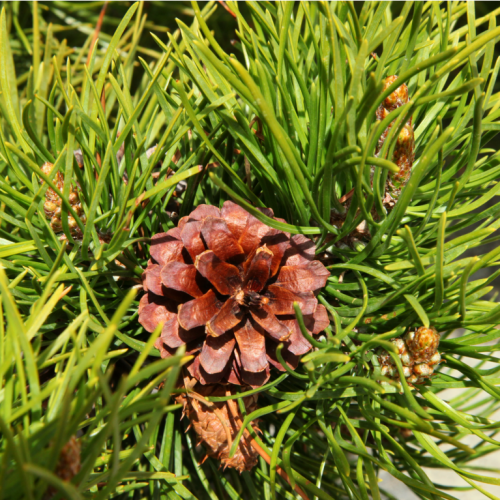
  • Cones: Small, ovoid, often serotinous (require heat or fire to open)
  • Lifespan: Moderate; many live 100–200 years, though some grow longer in protected zones
Native Habitat and Growth Conditions
  • Region: Native to western and northern North America; this batch is wild-harvested and distilled in the northeastern U.S.
  • Soil: Prefers well-drained, sandy or rocky soils; thrives in nutrient-poor or disturbed areas
  • Climate: Tolerant of wind, cold, and drought; grows at elevations from sea level up to 3,000 meters
  • Ecological Role: Pioneer species—quick to repopulate after fire or disturbance; stabilizes soil and creates wildlife shelter

Energetic Botanical Signature
Lodgepole Pine is a story of resilience through challenge. Its slender, often twisted trunk adapts to high winds and poor soil with quiet strength. It doesn’t seek attention—but it endures, upright and enduring where others fall. As a pioneer species, it reclaims burned or devastated landscapes, holding space for regeneration to begin.

Energetically, this plant offers the same gift: it shows us how to stand again after being leveled, how to root into what remains, and how to rebuild presence and breath—not with force, but with aligned persistence. This is the essence woven into the oil: anchored, adaptable, and fiercely alive.
Energetics

Energetic Properties

Resilience After Rupture | Return to Inner Structure | Breath of Stillness
Lodgepole Pine doesn’t just grow—it endures. It thrives in harsh conditions, rebounding after fire, cold, and exposure. Its medicine is not about force—it’s about alignment, recovery, and return. This oil invites the nervous system to exhale after chronic tension. It helps restore energetic integrity when you've scattered too far or stretched too thin.

It doesn’t push. It rebuilds—quietly, slowly, with presence.

Energetic Themes
  • Recovery after energetic trauma or emotional collapse
  • Strengthening the auric field after burnout or exposure
  • Calling energy back from scattered focus or grief states
  • Re-establishing inner scaffolding after identity rupture
  • Returning breath and awareness to the body

Spiritual Use
Lodgepole Pine is an excellent ally in post-ritual integration, especially after grief work, shadow healing, or plant medicine journeys. Its essence anchors the soul back into form, helping the psyche remember its structure after being cracked open. Use in anointing, diffusion, or body oil blends when spiritual clarity is needed without dissociation.

Traditional & Folklore

Lodgepole Pine is a tree of both practicality and sacredness—deeply respected by many Indigenous peoples across North America, especially the Plains and Plateau tribes. Its name reflects one of its most revered roles: the central structural poles of tipis and ceremonial lodges were traditionally made from this tree. Straight, strong, and flexible, it was seen as the pillar between earth and sky—a literal and symbolic axis of connection.
Medicine and Utility in Folk Traditions:
  • The needles and inner bark were used in infusions or steams for respiratory issues, coughs, and congestion.
  • Resin and pitch were applied to wounds, infections, and drawing out toxins. It was considered both protective and purifying.
  • The tree’s aroma was believed to clear spiritual stagnation, and its branches were sometimes used in smoke medicine to cleanse sacred spaces.
  • In some traditions, the cones' fire-activated opening was viewed as symbolic of rebirth after destruction—Lodgepole was seen as a post-fire healer of both land and soul.
Symbolism Across Cultures:
  • In energetic and ceremonial work, Lodgepole Pine has long been honored as a bridge between seen and unseen worlds.
  • Because it thrives in harsh, exposed environments and often grows back first after wildfire or ecological disruption, it carries the energy of resilience, reclamation, and regeneration.
  • Its straight form was associated with spiritual integrity and purpose—it teaches that true strength bends, but does not break.
Chemistry

Chemical Components

This particular Lodgepole Pine batch is unique—high in β-phellandrene (32.82%), β-pinene (20.89%), and δ-3-carene (19.43%)—giving it a beautifully crisp, resinous, and expansive aromatic profile. It carries a different weight than your typical α-pinene-dominant conifers—less sharp, more expansive, slightly citrusy-sweet with a woodsy backbone.

Dominant Constituents
  • β-Phellandrene (32.82%) – Antimicrobial, respiratory support, emotionally energizing and mildly euphoric
  • β-Pinene (20.89%) – Anti-inflammatory, decongestant, emotionally stabilizing
  • δ-3-Carene (19.43%) – Mucolytic, bone and joint support, often used for lymphatic and rheumatic conditions
  • Terpinolene (5.32%) – Mildly sedative, antioxidant, fresh green aroma
  • α-Pinene (4.92%) – Anti-inflammatory, bronchial dilator, clarifying
  • δ-Cadinene (4.83%) – Anti-inflammatory and grounding sesquiterpene
  • Myrcene, Limonene, and Sabinene – Add depth, subtle sweetness, and muscular tension relief
Minor but Notable Components
  • Bornyl acetate + Geranyl acetate – Soothing to the nervous system and skin
  • Linalool, α-terpineol, Terpinen-4-ol – Add gentle antimicrobial and emotional balancing effects
  • Manoyl oxide + Ent-manoyl oxide – Rare diterpenes contributing to grounding and deep energetics

Therapeutic Implications of This Chemistry
  • Potent respiratory oil—especially useful for deep lung clearing, mucolytic support, and emotionally heavy breathing patterns
  • Joint + bone support—δ-3-carene makes this batch a strong ally for inflammation, arthritic pain, and fluid retention
  • Energetically elevating + protective—β-phellandrene and terpinolene offer a subtly euphoric, clear-headed brightness
  • Emotionally stabilizing—ideal for grief, fatigue, emotional shutdown, or post-stress burnout
Recipes & Blends

Recipes & Blends

1. Breathe + Ground Chest Rub
For seasonal lung support, sinus clearing, and emotional heaviness in the chest.
  • 5 drops Lodgepole Pine
  • 3 drops Black Spruce
  • 2 drops Ravintsara
  • 2 drops Ginger CO₂
  • Dilute in 1 oz (30 mL) organic sunflower oil or jojoba
    Massage into chest and upper back morning and evening, or inhale deeply from hands.

2. Joint + Nerve Recovery Oil
For post-trauma muscular tension, joint pain, or lingering nerve flare-ups.
  • 4 drops Lodgepole Pine
  • 3 drops Helichrysum italicum
  • 2 drops Copaiba
  • 1 drop Nutmeg (Myristica fragrans)
  • 1 oz Arnica-infused oil or trauma oil base
    Apply topically to sore areas, especially after movement or PT.

3. Resilience Reset Anointing Oil
Use during integration work, after shadow processing, or post-ceremony.
  • 4 drops Lodgepole Pine
  • 2 drops Myrrh
  • 2 drops Palo Santo
  • 1 drop Orange
  • In 10 mL jojoba with a garnet or smoky quartz chip
    Apply to the soles of the feet, heart center, or base of the spine.

4. Energetic Boundaries + Breath Ritual Blend
For diffusing during meditation or energetic clearing when feeling overexposed or scattered.
  • 5 drops Lodgepole Pine
  • 3 drops Frankincense
  • 2 drops Lavender (High Altitude)
  • Optional: 1 drop Juniper Berry
    Diffuse for 15–30 minutes during grounding breathwork or journaling.
Safety Etc.

Safety Information

Lodgepole Pine essential oil is generally considered safe when used appropriately and in dilution. As with most conifer oils high in monoterpenes (especially β-pinene and δ-3-carene), it may oxidize over time, increasing the potential for skin irritation or sensitization. Always store tightly capped in a cool, dark place to maintain integrity.
  • Dermal Use: Dilute to 1–3% in carrier oil for topical applications. Perform a patch test if you have sensitive skin.
  • Avoid oxidized oil. If the oil has thickened or changed aroma significantly, discontinue topical use.
  • Internal use is not recommended unless under the supervision of a qualified practitioner.
  • Contraindications: Not for use in pregnancy, infants, or those with epilepsy unless advised by a healthcare professional.
  • Diffusion: Use in moderation. While emotionally clearing, overuse may be overstimulating to sensitive individuals.
This oil is potent, expansive, and grounding—but should always be used with awareness and respect for its chemistry and energetics.


Reviews (2)

Write a review

Note: HTML is not translated!
    Bad           Good
Powered By OpenCart
Stillpoint Aromatics © 2026